
Singapore is committing S$118 million in public funding to research that turns biological materials into chemicals, signifying its largest investment date in the field as it aims to make industrial manufacturing more sustainable and unlock new growth opportunities.
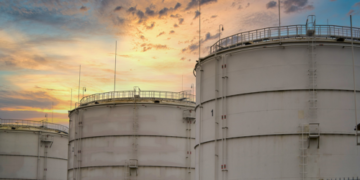
Released under the S$37 billion Research, Innovation, Enterprise 2030 (RIE 2030) plan, the Bioeconomy Funding project will manages industry challenges in Singapore’s energy and chemicals sector, which accounts for one-fifth of the country’s production output.
The project will fund research by institutes of higher learning and the Agency for Science, Technology and Research, with a target on translating scientific advances into practical industrial applications.
Minister for Education Desmond Lee, who declared the initiative, said it might support research by “bringing our strengths closer to industry requires and broader application”.
Jermaine Loy, managing with director of the Economic Development Board (EDB), said: “There are opportunities for Singapore to develop our capabilities in innovation and manufacturing of higher-value specialty chemicals and advanced materials, while supporting the transformation of our current industrial base towards more sustainable manufacturing.”
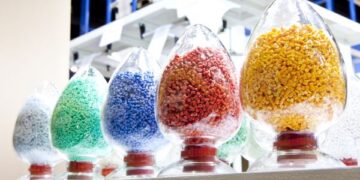
The new project comes amid developing industry interest in replacing petroleum-based feedstocks with biological options, including yeast and oil palm-derived materials.
Following consultations with companies and investors, the initial research push will target on 3 areas: transforming industrial by-products, called “sidestreams”, into usable materials; growing new microbe- and enzyme-based manufacturing methods; and improving processing and production efficiency.
Researchers will also explore how biological and chemical process can be integrated to manufacture commercially viable goods, including high-grade synthetic rubbers.
The present commitment builds on earlier authorities funding, bringing Singapore’s spending on bioeconomy-associated projects to about S$200 million over the next 5-years.
“Our ambition is for the bioeconomy to emerge as a new source of growth for Singapore,” mention Loy, pointing to the potential for business expansion and job creation in specialty chemicals and advanced materials.
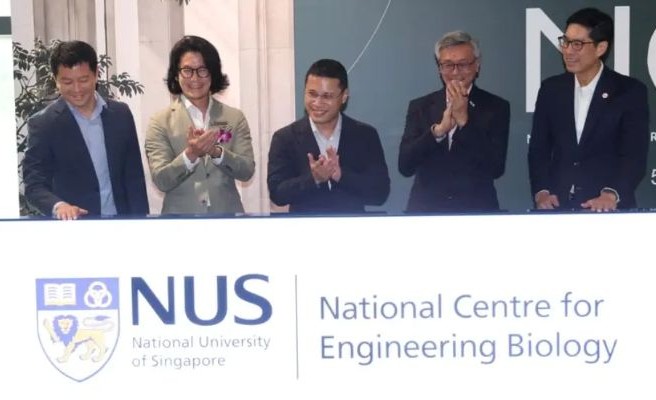
The funding declaration coincided with the opening of the S$50 million National Centre for Engineering Biology (NCEB), established with support from the preceding 5-year RIE 2025 plan.
Based at the National University of Singapore, the centre brings together talents from numerous organisations to expand production approaches for specialty chemicals and advance product design and testing using of machine learning and artificial intelligence.
More than 150 researchers, students and expert employees across partner institutions support the centre. Recruitment is likewise under way for another 50 positions, along with principal investigators, postdoctoral researchers, and technical, engineering and management staff.
Speaking at the centre’s release, Lee stated Singapore was well-positioned to contribute to engineering biology, “managing worldwide challenges while reinforcing advanced production and supply chain resilience”.