
Tuesday, November 17, 2026
hello@chemdive.com
Write for us
ChemDive - Unveiling the latest in the chemical world
No Result
View All Result
  • Home
  • World
  • Asia
  • America
  • Europe
  • MENA
  • Energy
  • Petrochemicals
  • Speciality Chemicals
  • Product ListHot
  • Home
  • World
  • Asia
  • America
  • Europe
  • MENA
  • Energy
  • Petrochemicals
  • Speciality Chemicals
  • Product ListHot
No Result
View All Result
ChemDive - Unveiling the latest in the chemical world
No Result
View All Result
Home Asia

C-DEP–CWS report identifies priority chemicals for India’s Rs. 37,500 crore coal gasification push

Taanvi Sawhnay by Taanvi Sawhnay
November 16, 2026
in Asia
Reading Time: 2 mins read
0
A A
0
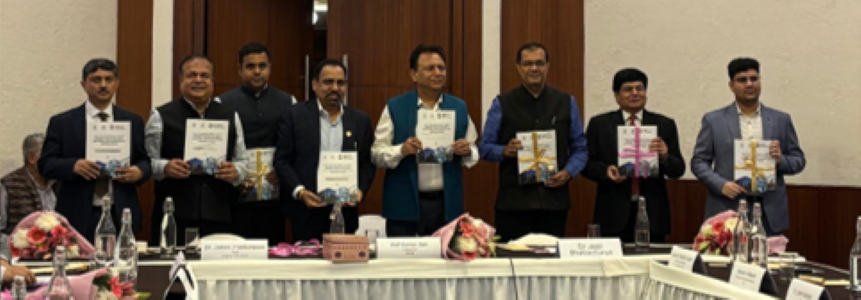
C-DEP–CWS report identifies priority chemicals for India’s Rs. 37,500 crore coal gasification push

Image Credit:

In 2024, India spent around US$37 billion importing LPG, LNG, urea, and Diammonium Phosphate (DAP), even though the nation of holds huge coal reserves that could be used to make these products or viable options. To deal with this, a new report from the Centre for Domestic Economy Policy Research (C-DEP) and the Centre for WTO Studies (CWS) in New Delhi detects which coal-derived chemicals should be prioritized. By targeting on these specific chemicals, India can efficiently reduce its reliance on foreign imports and build a stronger, more resilient domestic economy.

As the Indian government rolls out its Rs. 37,500 crore scheme to gasify an additional 75 million tons of coal and lignite each year, these findings highlights a need to prioritise on high-value outputs. To meet the national aim of 100 million tons by 2030, India must prioritize products provides the strongest economic returns, strategic benefits, and import-substitution potential.

Titled Coal-to-Chemicals Policy in India: A Strategic Framework for Product Prioritisation under the National Coal Gasification Mission, the report analyses 23 coal-derived products against eight economic, industrial, and strategic criteria. It detects hydrogen as the top priority, followed by synthetic natural gas (SNG), methanol, ammonia, dimethyl ether (DME), liquefied natural gas (LNG), liquefied petroleum gas (LPG), urea, and diammonium phosphate (DAP).

As per the findings, India spent more than US$27 billion on LPG and LNG imports in 2024, alongside an extra US$9.6 billion on imported urea and DAP. Adopting coal gasification could offset a portion of these import bills by permitting the domestic production of essential fuels, fertilizers, and chemical feedstocks.

“Coal gasification in India is at an early stage. The primary concern is to set up which technologies are commercially feasible for Indian coal and which products provides the best economic returns. While import relies, supply security and strategic importance ought to guide product prioritisation, we must permit industry to test these technologies and establish their feasibility. The Government has formed the required policy and financial suppport. The next step is for industry to show commercially feasible ventures, and which a more focused product prioritisation framework can be evolved.” Dr. Anil Kumar Jain (IAS), Chairperson, Petroleum and Natural Gas Regulatory Board (PNGRB), mentioned during his speech.

Also Read :

IndianOil pushes India–US specialty chemicals partnership with eye on global competitiveness

Merck opens new molybdenum facility in South Korea

Singapore commits S$118 million to turn biological materials into chemicals

Swiss chemicals distributor, IMPAG Group, buys Broadways Chemtech to enter India

“India has the coal resources and a developing domestic market for fuels, fertilisers and industrial chemicals. With ₹37,500 crore dedicated to coal gasification, the priority must now be to identify where these investments can deliver the greatest economic advantages. Our analysis gives a framework for directing investment towards products that can decrease imports, reinforce domestic supply chains and support India’s industrial self-reliance,” stated Dr. Jaijit Bhattacharya, President, C-DEP.

The report also looks at lessons from China’s coal-to-chemicals growth. While China successfully ramped up domestic production of fertilisers, methanol, and other chemicals via incorporated industrial clusters, moving too fast left the nation with underused plant, heavy capital costs, and water shortages.

To get it right, the study recommends a phased investment approach for India and increase shared production hubs where central gasification plants feed numerous downstream industries. Instead of expanding blindly, India should permit the economic and strategic value of the final products guide its investments. Prioritising the right products will support India cut down on energy and fertiliser imports whilst unlocking new opportunities for local chemical makers.

ShareTweetShareShareSend
Taanvi Sawhnay

Taanvi Sawhnay

I’m Taanvi Sawhnay, known as Tan, a professional blogger with a deep interest in the global chemical industry. I’ve spent years writing for various platforms, delivering insightful analysis and up-to-date news. At ChemDive, I share my knowledge and passion, making complex industry trends accessible to professionals, academics, and enthusiasts alike. My goal is to engage readers with clear, informative content while keeping them informed about the latest developments in the chemical world.

Related Posts

BASF, HSCC Explore Joint Venture for Polyamide 6 Value Chain
Asia

BASF, HSCC Explore Joint Venture for Polyamide 6 Value Chain

October 21, 2026
0
GHCL diversifies into specialty chemicals; commences 2,800 MT Bromine manufacturing
Asia

GHCL diversifies into specialty chemicals; commences 2,800 MT Bromine manufacturing

October 16, 2026
0
Evonik, Japanese Partners to Develop Polyurethane Recycling Model
Asia

Evonik, Japanese Partners to Develop Polyurethane Recycling Model

October 16, 2026
0
Sunset review of anti-dumping duties on TDI imports initiated
Asia

Sunset review of anti-dumping duties on TDI imports initiated

October 15, 2026
0
BPCL, Shell and Tiki Tar begin operations of cost-delivered bitumen jv
Asia

BPCL, Shell and Tiki Tar begin operations of cost-delivered bitumen jv

October 15, 2026
0
Supreme Court shields Tata Chemicals from action in Gujarat sanctuary dispute
Asia

Supreme Court shields Tata Chemicals from action in Gujarat sanctuary dispute

October 8, 2026
0

Leave a Reply Cancel reply

Your email address will not be published. Required fields are marked *

Categories

  • America
  • Asia
  • Energy
  • Europe
  • Events
  • Inventions
  • Latest News
  • MENA
  • Petrochemicals
  • Speciality Chemicals
  • World

hhh

US rare-earths manufacturers Current Chemicals scales up fluoride manufacturing with fresh investment

Refining Gains Outpace Chemical Results in Third-Quarter Earnings

Chemical Industry 2027 — Shifting focus from survival to strategic reinvention: Deloitte

Syensqo Ends Fluorosurfactant Manufacturing at Italian Plant

BASF raises outlook once more as prices and volumes rise

About ChemDive

ChemDive is a premier platform providing up-to-date global chemical news, industry insights, and in-depth analysis of trends shaping the chemical sector. It serves as a comprehensive resource for professionals, researchers, and enthusiasts, offering coverage on innovations, regulations, market developments, and technological advancements in the chemical industry. 

Quick Links

  • About Us
  • Privacy Policy
  • Write for Us
  • Terms & Conditions
  • Contact Us

Contact Us

Email: hello@chemdive.com

Designed & Managed by AK Network Solutions

Welcome Back!

Login to your account below

Forgotten Password?

Retrieve your password

Please enter your username or email address to reset your password.

Log In
No Result
View All Result
  • Home
  • World
  • Asia
  • America
  • Europe
  • MENA
  • Energy
  • Petrochemicals
  • Speciality Chemicals
  • Product List

© 2024. Designed & Developed by AK Network Solutions

This website uses cookies. By continuing to use this website you are giving consent to cookies being used. Visit our Privacy and Cookie Policy.