
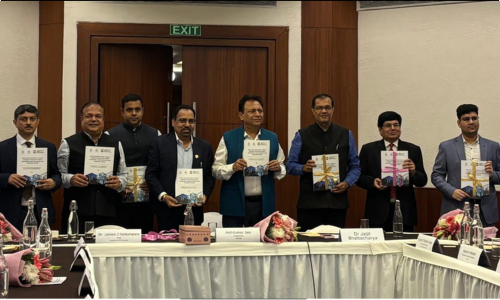
A latest report by the Centre for Domestic Economy Policy Research (C-DEP) and the New Delhi-based Centre for WTO Studies (CWS) ranks the chemicals India should make from coal to reduce import reliance. The study comes as the Government moves forward with its Rs. 37,500-crore scheme to promote surface coal and lignite gasification ventures. The scheme targets to gasify an additional 75-mn-tons of coal and lignite annually, against a national target of 100-mn tons by 2030.
Titled “Coal-to-Chemicals Policy in India: A Strategic Framework for Product Prioritisation under the National Coal Gasification Mission,” the report rankings 23 coal-derived products on eight economic, industrial and strategic parameters. Hydrogen ranks first, followed via synthetic natural gas (SNG), methanol, ammonia, dimethyl ether (DME), LNG, LPG, urea and diammonium phosphate (DAP).
India imported around $37-bn worth of LPG, LNG, urea and DAP in 2024, the report notes. LPG and LNG accounted for over $27-bn of that, and urea and DAP for $9.6-bn.
“Coal gasification in India is at an early stage. The instant challenge is to set up which technologies are commercially feasible for Indian coal and which products provide the best economic returns. While import rely, supply security and strategic importance should guide product prioritisation, we must first permit industry to test these technologies and establish their feasibility. The Government has formed the essential policy and financial guidance. The next step is for industry to show commercially feasible ventures, after which a more aimed product prioritisation framework can be advanced,” stated Dr. Anil Kumar Jain (IAS), Chairperson, Petroleum and Natural Gas Regulatory Board (PNGRB).
The study also reviews China’s coal-to-chemicals build-out through incorporated industrial clusters. That enlargement left underutilised plants, excessive capital costs and water constraints. The report suggests that India invest in phases and set up incorporated production clusters, wherein common gasification facilities provide numerous downstream chemical units.
Dr. Jaijit Bhattacharya, President of C-DEP, stated the priority now is to detect wherein the dedicated funds can supply the greatest economic advantage. He stated the framework is supposed to steer investment towards products that cut imports and reinforce domestic supply chains.