
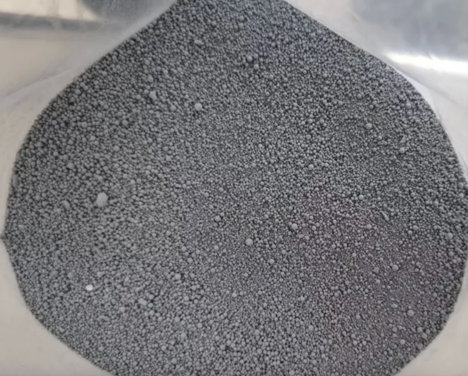
Concrete is no longer viewed as a simple combination of cement, water, and aggregates. Modern construction demands materials that deliver higher strength, longer service life, better workability, and lower environmental impact, often all at the same time. Meeting these expectations depends not only on advances in cement technology but also on the continued development of construction chemicals, particularly polycarboxylate ether (PCE) superplasticizers (https://hxpce.com/what-is-polycarboxylate-pce-superplasticizer/).
Since their commercial introduction, PCE-based admixtures have become the preferred choice for many high-performance concrete applications, gradually replacing earlier generations of water reducers. Their ability to improve workability while maintaining a low water-cement ratio has changed the way modern concrete mixtures are designed and optimized.
For professionals involved in specialty chemicals, concrete production, material science, and admixture manufacturing, understanding how PCE superplasticizers (https://hxpce.com/polycarboxylate-ether-superplasticizer-properties/) function provides valuable insight into one of the most important technologies shaping today’s construction industry. Their performance is rooted in polymer chemistry, but the benefits extend throughout every stage of concrete production, from batching and placement to long-term durability.
The Evolution of Water-Reducing Admixtures
Concrete has always required enough water to allow proper mixing, transportation, placement, and consolidation. The challenge is that adding more water also increases the water-cement ratio, which generally leads to lower compressive strength, higher permeability, greater drying shrinkage, and reduced durability.
The earliest water-reducing admixtures were developed to address this conflict by improving the dispersion of cement particles. Lignosulfonate-based plasticizers represented the first generation of these products and offered modest improvements in workability. They were later followed by sulfonated naphthalene and sulfonated melamine condensates, which delivered significantly higher water reduction and became widely used in high-strength concrete.
The development of polycarboxylate ether (PCE) technology marked a much larger step forward. Unlike previous generations, which relied mainly on electrostatic repulsion to separate cement particles, PCE polymers introduced steric stabilization as an additional dispersion mechanism. This change made it possible to achieve greater water reduction, improved slump retention, and far more flexibility when designing admixtures for different applications.
Instead of serving as a single universal product, modern PCE chemistry provides manufacturers with a platform that can be adapted to different cement systems, construction methods, and performance requirements.
Understanding PCE Molecular Structure
The improved performance of PCE superplasticizers comes largely from their molecular structure, which differs fundamentally from that of traditional water reducers.
Most PCE polymers have a comb-shaped configuration. A negatively charged polymer backbone adsorbs onto the surface of cement particles, while long polyether side chains extend outward into the surrounding cement paste. Functional groups along the polymer help anchor the molecule to the particle surface, allowing the side chains to remain fully extended.
Once the polymer has attached to the cement particles, these side chains create physical space between neighboring particles. Rather than allowing the particles to flocculate into larger clusters, they keep them separated throughout the paste by generating steric hindrance. This mechanism is considerably more effective than relying on electrical repulsion alone.
As the cement particles disperse, water that was previously trapped inside cement flocs is released back into the mixture. Instead of adding extra mixing water to improve workability, the concrete makes more efficient use of the water already present. The result is a mixture that flows more easily while maintaining a lower water-cement ratio.
This combination of electrostatic dispersion and steric hindrance explains why PCE superplasticizers (https://hxpce.com/polycarboxylate-acid-superplasticizer-mechanism-properties-and-performance/) can simultaneously improve fluidity, strength, and durability without fundamentally changing the hydration chemistry of cement.
Why Dispersion Improves Concrete Performance
The primary role of a PCE superplasticizer is not to change the chemistry of cement hydration, but to improve how cement particles are distributed throughout the paste. Better dispersion creates a more uniform system, allowing the available water to be used more efficiently from the moment mixing begins.
As cement particles separate, less water is trapped inside particle clusters, leaving more free water to lubricate the mixture. This improves workability without increasing the total water content. At the same time, the lower water demand allows engineers to reduce the water-cement ratio while maintaining the same consistency, producing a denser hardened concrete with improved mechanical properties.
The benefits extend well beyond fluidity. Better particle distribution promotes more uniform hydration, reduces the likelihood of bleeding, improves particle packing, and helps produce a more homogeneous concrete matrix. These combined effects contribute to higher compressive strength, lower permeability, and improved long-term durability.
Rather than acting on a single property, PCE superplasticizers improve several aspects of concrete performance at the same time. This is one of the main reasons they have become the preferred water-reducing technology in modern concrete production.
High Water Reduction Without Sacrificing Flowability
One of the defining advantages of PCE superplasticizers is their ability to achieve significant water reduction while maintaining excellent workability. Traditionally, improving concrete flow meant adding more water, but this inevitably increased the water-cement ratio and reduced the strength and durability of the hardened concrete.
PCE technology changes this relationship by allowing the same level of workability to be achieved with much less water. Depending on the mix design, cement type, and dosage, engineers can reduce mixing water while maintaining the target slump, increase slump without adding extra water, or improve both workability and strength at the same time.
This flexibility gives concrete producers more options during mix design. Some projects prioritize higher early strength, while others require extended workability for long transportation distances or complex placement conditions. Because the polymer structure can be adjusted for different performance objectives, PCE superplasticizers can support a wide range of production strategies without fundamentally changing the concrete mixture.
The result is greater freedom during mix optimization, allowing producers to balance performance, construction efficiency, and material costs according to the needs of each project.
Improved Rheology for Modern Placement Methods
Modern construction methods place much higher demands on fresh concrete than traditional cast-in-place work. High-rise pumping, densely reinforced structural members, self-consolidating concrete, slip-form construction, architectural concrete, and automated precast production all require concrete that flows easily while remaining stable throughout placement.
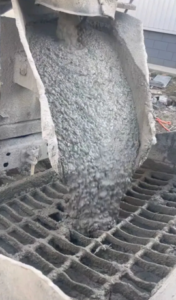
PCE superplasticizers help achieve this balance by improving the rheological properties of fresh concrete. The mixture becomes easier to pump, spread, and consolidate, yet still maintains sufficient cohesion to resist segregation and excessive bleeding.
This combination is particularly valuable when concrete must travel long distances through pumping systems or pass through heavily congested reinforcement. Instead of relying on additional mixing water to improve flow—which often increases segregation and weakens the hardened concrete—PCE-based admixtures maintain fluidity by improving particle dispersion within the cement paste.
The result is smoother placement, more complete filling of complex formwork, and greater consistency throughout the construction process. These advantages have made PCE technology an important component of many modern concreting methods where both workability and stability are critical.
Compatibility with Supplementary Cementitious Materials
As the construction industry works toward lower-carbon concrete, supplementary cementitious materials (SCMs) have become increasingly common in mix design. Materials such as fly ash, ground granulated blast-furnace slag, silica fume, calcined clays, and natural pozzolans are widely used to reduce clinker consumption while improving selected durability characteristics.
Although these materials provide important environmental and technical benefits, they also change the behavior of fresh concrete. Differences in particle size, surface area, particle shape, and hydration characteristics can all influence workability, setting time, and admixture demand.
PCE superplasticizers help maintain consistent concrete performance despite these changes. Because the molecular structure of the polymer can be tailored during synthesis, manufacturers are able to develop formulations that perform well with different cementitious systems instead of relying on a single universal product.
This adaptability has become increasingly important as concrete mixtures grow more complex. Whether the objective is improving slump retention, maintaining workability with high SCM replacement levels, or achieving compatibility with alternative binders, modern PCE technology provides engineers with much greater flexibility than earlier generations of water reducers.
Tailoring Polymer Design for Different Applications
Unlike many traditional admixtures, PCE superplasticizers are not a single standardized chemical. They are a family of polymers whose molecular structures can be adjusted to meet different performance requirements.
During polymer synthesis, manufacturers can modify characteristics such as side chain length, side chain density, backbone composition, molecular weight, and the distribution of functional groups. Although these changes occur at the molecular level, they have a direct influence on how the admixture performs in concrete.
For example, one formulation may be designed to deliver rapid initial dispersion for precast production, while another focuses on maintaining slump during long transportation times. Some products are optimized for early strength development, whereas others are developed to improve compatibility with specific cement systems or supplementary cementitious materials.
Because these properties can be adjusted independently, selecting a PCE superplasticizer is not simply a matter of choosing a product labeled “water reducer.” The polymer must be matched to the concrete mixture, production process, and project requirements. This flexibility is one of the reasons PCE technology has become the dominant platform for modern concrete admixtures.
Supporting High-Performance Concrete
High-performance concrete is expected to satisfy multiple requirements simultaneously. In addition to achieving high compressive strength, it must often provide low permeability, excellent durability, controlled shrinkage, and reliable workability throughout transportation and placement.
A low water-cement ratio remains one of the most effective ways to achieve these properties. However, reducing water without using an efficient superplasticizer quickly makes the concrete difficult to mix, pump, consolidate, and finish.
PCE superplasticizers solve this problem by maintaining fluidity while allowing the mixture to retain a very low water content. The improved dispersion of cement particles produces a denser cement matrix after hydration, helping concrete achieve higher strength and better resistance to water penetration and aggressive environmental conditions.
For this reason, PCE technology has become a standard component in many demanding applications, including bridges, tunnels, offshore structures, high-rise buildings, nuclear facilities, and other infrastructure where long-term performance is just as important as initial construction efficiency.
Benefits for Precast Manufacturing
The requirements of precast concrete production differ from those of conventional ready-mixed concrete. Manufacturers must maintain consistent workability while also shortening production cycles and producing components with accurate dimensions and high-quality surface finishes.
PCE superplasticizers help support these objectives throughout the manufacturing process. Improved flowability allows fresh concrete to fill complex moulds more easily, even when reinforcement is dense or the geometry is difficult. At the same time, lower water-cement ratios contribute to higher early strength, making it possible to remove moulds sooner and increase production efficiency.
Consistency from one batch to the next is equally important in automated precast plants. Stable workability reduces production interruptions, while uniform fresh concrete properties help minimize surface defects, dimensional variation, and quality control issues. These advantages make PCE technology particularly well suited to modern precast manufacturing, where repeatability is often as important as peak performance.
Factors Influencing Performance
Although PCE superplasticizers offer significant advantages, their performance always depends on the complete concrete system rather than the polymer alone.
Cement composition is one of the most important variables. Differences in mineral composition, sulfate balance, fineness, and alkali content can all influence how the polymer adsorbs onto cement particles. Aggregate grading, supplementary cementitious materials, mixing sequence, dosage, temperature, and mixing energy also affect the final performance of the admixture.
Because of these interactions, the same PCE formulation may produce different results when used with materials from another supplier or under different environmental conditions. A dosage that performs well in one concrete plant may require adjustment after changes in cement, aggregates, or production procedures.
For this reason, laboratory evaluation and trial batching remain an essential part of admixture selection. Rather than assuming that one formulation will perform equally well in every application, engineers should verify compatibility under the actual production conditions expected for the project. This approach provides a much more reliable basis for mix optimization than relying solely on product specifications or previous experience.
Common Misconceptions About PCE Superplasticizers
Although PCE superplasticizers are now widely used throughout the construction industry, several misconceptions continue to influence how they are selected and applied. These misunderstandings can lead to unrealistic expectations or inappropriate use during mix design.
One of the most common assumptions is that increasing the dosage will always produce better performance. In reality, every concrete mixture has an optimum dosage range. Beyond that point, additional admixture may provide little improvement in workability and, in some cases, may negatively affect setting characteristics, air content, or overall mixture stability. The correct dosage should always be established through laboratory evaluation and trial batching rather than by simply adding more product.
Another misconception is that a high-quality superplasticizer can compensate for a poor concrete mix design. While PCE technology significantly improves particle dispersion, it cannot correct problems caused by poorly graded aggregates, unsuitable cement, excessive fines, or inadequate quality control. Good concrete performance still depends on a well-balanced mixture in which all materials work together.
It is also easy to assume that all PCE superplasticizers perform in the same way because they belong to the same chemical family. In practice, considerable differences exist between formulations. Manufacturers tailor molecular structures to achieve different objectives, such as improved slump retention, rapid strength development, lower dosage requirements, or compatibility with particular cement systems. Selecting the right product therefore requires an understanding of both the polymer and the concrete mixture in which it will be used.
Finally, some people view improved workability as the only benefit provided by PCE technology. Better flowability is certainly one of its most visible advantages, but it is only part of the overall picture. By reducing water demand and improving particle dispersion, these admixtures also contribute to higher strength, lower permeability, improved pumping performance, more consistent production, and, in many cases, reduced cement consumption.
The Role of PCE in Sustainable Construction Chemicals
Sustainability has become a major driver of innovation across the construction industry, and concrete admixtures play an increasingly important role in helping producers meet environmental targets without compromising performance.
Rather than reducing carbon emissions directly, PCE superplasticizers improve the efficiency of concrete production. Because they allow lower water-cement ratios while maintaining good workability, they make it easier to optimize mix designs and reduce unnecessary cement consumption. Since cement manufacturing is one of the largest contributors to the carbon footprint of concrete, even modest reductions in cement content can have a meaningful environmental impact.
PCE technology also supports the wider use of supplementary cementitious materials such as fly ash, slag, calcined clays, and natural pozzolans. These materials replace part of the Portland cement while maintaining the required engineering performance, helping producers develop concrete mixtures with lower embodied carbon.
Long-term durability is another important sustainability benefit. Concrete that remains serviceable for a longer period requires fewer repairs, less maintenance, and less material replacement over its lifetime. Improved workability also reduces waste during placement by minimizing segregation, rejected batches, and construction defects. Together, these advantages make PCE superplasticizers an important component of more resource-efficient concrete production.
Future Directions
Research into PCE chemistry continues to evolve alongside changes in cement technology and construction practices.
One important area of development is improving compatibility with emerging low-carbon binders. As the industry explores new cementitious systems with different hydration mechanisms, polymer formulations must also evolve to maintain consistent workability and strength development.
Researchers are also refining molecular structures to improve slump retention during long transportation times, increase robustness when raw materials vary, and provide more stable performance under challenging production conditions. These improvements are becoming increasingly valuable as concrete supply chains grow more complex and quality requirements become more demanding.
At the same time, digital technologies are beginning to influence admixture development. Performance-based specifications, data-driven mix optimization, and automated batching systems are allowing producers to fine-tune admixture selection with greater precision than before. In this environment, PCE superplasticizers are likely to become even more specialized, with formulations designed for specific materials, production methods, and construction applications rather than serving as general-purpose water reducers.
Conclusion
PCE superplasticizers have fundamentally changed modern concrete technology by combining advanced polymer science with practical engineering requirements. Their comb-shaped molecular structure disperses cement particles more efficiently than earlier generations of water reducers, allowing concrete to achieve high workability while maintaining a low water-cement ratio.
The benefits extend throughout the entire concrete production process. Improved dispersion enhances fresh concrete performance, supports higher strength and lower permeability, improves pumping and placement, and allows greater flexibility when designing mixtures for ready-mixed concrete, precast manufacturing, and high-performance infrastructure. As polymer formulations continue to evolve, PCE technology is also becoming increasingly adaptable to alternative binders and more sustainable concrete systems.
Although the chemistry behind these admixtures is sophisticated, successful application still depends on proper mix design, compatibility testing, and quality control. When these factors are considered together, PCE superplasticizers provide engineers and producers with an effective tool for improving both construction efficiency and long-term concrete performance, ensuring they will remain a key technology in the future of modern construction chemicals.
Author: Jenny Wang
Author introduction: Jenny Wang works with Huaxuan’s construction chemical and concrete admixture team, focusing on practical guidance for concrete producers, contractors, specifiers, and building-material buyers who need clearer information about water reducers, PCE superplasticizers, compatibility, dosage, and jobsite performance.