
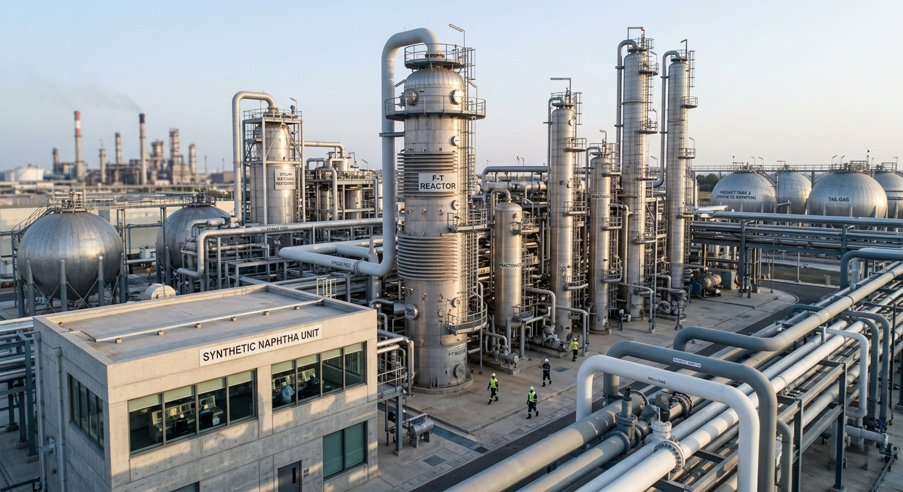
Naphtha has long been one of the most valuable intermediate products in the petrochemical value chain, serving as the primary feedstock for ethylene, propylene, and countless downstream chemicals. But as the world looks for alternatives to conventional crude oil, synthetic naphtha production has emerged as a critical pathway for supplying this feedstock from non-petroleum sources. Understanding how synthetic naphtha is made, what feeds into it, and why it matters is essential for anyone tracking the future of the chemical industry.
What Is Synthetic Naphtha?
Synthetic naphtha is a light hydrocarbon fraction, chemically similar to petroleum-derived naphtha, but manufactured from non-crude feedstocks such as coal, natural gas, biomass, or even captured carbon dioxide. Rather than being separated directly from crude oil through atmospheric distillation, synthetic naphtha is built up from simpler molecules through a series of controlled chemical reactions.
The result is a naphtha-range hydrocarbon mixture — typically boiling between roughly 30°C and 200°C — that can be used interchangeably with conventional naphtha in refineries and petrochemical crackers, often with the added benefit of being cleaner in composition.
Key Feedstocks Used in Synthetic Naphtha Production
Synthetic naphtha can be produced from a variety of carbon sources, which is part of what makes it so strategically important. Common feedstocks include:
- Natural gas – converted into synthesis gas and then into liquid hydrocarbons
- Coal – gasified to produce syngas as a base for further synthesis
- Biomass and agricultural residues – used in biomass-to-liquid (BTL) routes
- Petroleum coke and residues – repurposed as gasification feedstock
- Captured CO2 and green hydrogen – an emerging route aligned with carbon-utilization goals
This feedstock flexibility means synthetic naphtha production can be tailored to regional resource availability, whether that’s abundant natural gas, coal reserves, or renewable biomass.
The Core Production Process
The most established and widely studied route to synthetic naphtha is the Fischer-Tropsch (FT) process, a technology originally developed in the 1920s and refined over decades of industrial use. The overall production pathway generally follows these stages:
1. Syngas Generation
The chosen feedstock (natural gas, coal, or biomass) is converted into synthesis gas — a mixture of carbon monoxide and hydrogen — through gasification or reforming. This syngas serves as the fundamental building block for everything downstream.
2. Fischer-Tropsch Synthesis
The syngas is passed over a catalyst, typically iron- or cobalt-based, under controlled temperature and pressure conditions. This step chemically stitches carbon and hydrogen atoms together into longer-chain hydrocarbons, producing a mix of waxes, liquid condensates, and lighter hydrocarbon gases.
3. Hydrocracking and Hydrotreating
The heavier wax fractions produced by the FT reaction are hydrocracked to break them down into shorter, naphtha-range molecules, while hydrotreating removes any residual oxygenates and olefins. This step is essential for achieving fuel- or feedstock-grade quality.
4. Fractionation and Blending
Finally, the processed hydrocarbon stream is fractionated to isolate the naphtha-boiling-range components. These fractions may then be blended in specific ratios to meet target specifications for downstream use, whether as a petrochemical cracker feedstock or a fuel-blending component.
According to technical resources on Fischer-Tropsch chemistry, this indirect liquefaction approach is particularly well suited to naphtha production because of the paraffinic nature of the FT reaction products, which lend themselves naturally to the light hydrocarbon range.
How Synthetic Naphtha Differs From Conventional Naphtha
While synthetic naphtha is designed to be a near drop-in substitute for crude-derived naphtha, there are some notable differences in composition:
- Lower sulfur and nitrogen content — since these heteroatoms are removed from the syngas before synthesis to protect the FT catalyst
- Minimal aromatic content — FT-derived naphtha is largely paraffinic, unlike crude naphtha which contains higher aromatic levels
- Reduced polar contaminants — resulting in a cleaner feedstock for downstream cracking units
- Consistent, tunable composition — because the process parameters can be adjusted to favor specific hydrocarbon chain lengths
These characteristics often make synthetic naphtha an attractive feedstock for olefin production, since cleaner paraffinic streams can improve cracker yields and reduce unwanted by-products such as coke and aromatics.
Industrial Applications of Synthetic Naphtha
Synthetic naphtha serves several important roles across the chemical and energy sectors:
- Petrochemical feedstock for steam cracking into ethylene and propylene
- Gasoline blending component, thanks to its favorable octane characteristics
- Solvent applications in industrial and specialty chemical processes
- Precursor for aromatics production, including benzene, toluene, and xylene, via downstream reforming
Because it can substitute directly for crude-derived naphtha in most existing infrastructure, synthetic naphtha offers refiners and chemical producers a way to diversify feedstock sourcing without significant capital investment in new equipment.
Advantages of Synthetic Naphtha Production
- Feedstock diversification away from a sole reliance on crude oil
- Energy security for regions with abundant coal, gas, or biomass but limited crude reserves
- Lower contaminant levels, simplifying downstream processing
- Compatibility with carbon capture and utilization strategies when CO2-based syngas routes are used
- Potential for a smaller carbon footprint when renewable feedstocks like biomass or green hydrogen are employed
Challenges and Economic Considerations
Despite its advantages, synthetic naphtha production faces several hurdles that have historically limited large-scale adoption:
- High capital costs for gasification and Fischer-Tropsch reactor infrastructure
- Sensitivity to crude oil price cycles, which affects the economic competitiveness of synthetic routes
- Energy intensity of syngas generation, particularly from coal-based routes
- Scale-up complexity, since FT plants require significant throughput to achieve favorable unit economics
Industry analysts note that interest in gasification-based synthetic fuel projects tends to rise and fall with crude oil prices, making long-term policy support and stable investment frameworks important for sustained development of this technology.
The Future Outlook for Synthetic Naphtha
As industries look to decarbonize and diversify feedstock supply chains, synthetic naphtha production is gaining renewed attention — particularly through biomass-to-liquid and power-to-liquid pathways that combine renewable hydrogen with captured carbon dioxide. These next-generation routes aim to reduce the carbon intensity of naphtha production even further, aligning it with broader sustainability goals in the chemical industry.
As catalyst technology improves and carbon capture becomes more economically viable, synthetic naphtha is likely to play an increasingly important role alongside conventional naphtha in feeding the world’s petrochemical crackers.
Conclusion
Synthetic naphtha production represents a versatile and strategically important pathway for the chemical industry, offering a route to naphtha-range hydrocarbons from coal, natural gas, biomass, and even captured carbon. While technical and economic challenges remain, ongoing advances in Fischer-Tropsch technology, catalyst design, and renewable syngas generation continue to strengthen the case for synthetic naphtha as a complement — and in some cases, an alternative — to crude-derived feedstocks.
Author’s Bio: Mandar Shewale is a Marketing Specialist at Research Intelo with experience in digital marketing, SEO, content planning, and market research communications. He works on content development, search optimization, and marketing coordination across research-focused projects. His work involves supporting online visibility initiatives and maintaining content quality across digital platforms.
Author’s Bio: Mandar Shewale is a Marketing Specialist at Research Intelo with experience in digital marketing, SEO, content planning, and market research communications. He works on content development, search optimization, and marketing coordination across research-focused projects. His work involves supporting online visibility initiatives and maintaining content quality across digital platforms.