
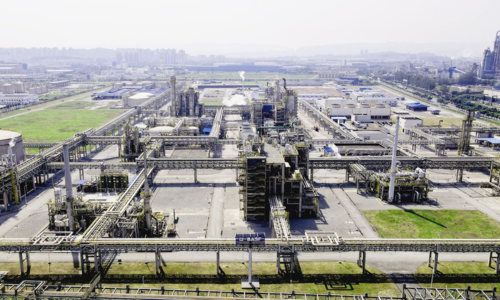
Germany-based chemical major BASF has signed a global licence agreement with Japan-based Sumitomo Chemical – via its license companion Technip Energies – to install the latter’s hydrogen chloride (HCl) oxidation technology throughout its isocyanates manufacturing sites in the US, Europe, and Asia.
Technip Energies, the France-based engineering group, holds specific sublicensing rights to Sumitomo’s technology. The current deal covers all latest and future BASF Group sites wherein the process is anticipated to be applied.
HCl is generated as a by-product in isocyanate production, which feeds broadly speaking into polyurethane manufacturing. Sumitomo’s procedure makes use of a proprietary catalyst to convert that HCl back into chlorine, that is then recycled as feedstock for similarly isocyanate output. The corporation says the technology decrease greenhouse gas emissions per unit of chlorine produced by using more than 90% compared with conventional sodium chloride electrolysis.
BASF generates numerous million tons of isocyanates yearly across its global Verbund network. The addition of HCl recycling is anticipated to improve feedstock performance and supply chain resilience at those sites.
Sumitomo’s technology has already been adopted at 10 plants worldwide, mainly among isocyanate manufacturers. The Sumitomo Chemical agreement reaches the technology’s reach to one of the biggest players within the isocyanates market.