
Canada’s E3 Lithium Ltd. Has entered into a non-binding memorandum of understanding (MOU) with Epsilon CAM Pvt. Ltd., the Germany-based cathode active materials (CAM) arm of Mumbai-headquartered Epsilon Advanced Materials, to explore long-term supply of battery-grade lithium carbonate from E3’s Clearwater Project in Alberta.
The MOU, effective September 1, 2026, contemplates supply of up to 5,000 tons per year of battery-grade lithium carbonate over a 5-year term — as much as 40% of E3’s proposed Stage 1 manufacturing of 12,000 tons per year from Clearwater. Final volumes and commercial terms continue to be worked out as the 2 companies move toward a definitive agreement.
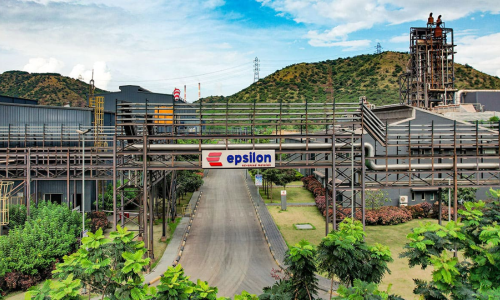
For Epsilon CAM, the tie-up would add a new, geographically diversified feedstock source to support its Lithium Iron Phosphate (LFP) cathode active materials business, whose Gen III LFP is already going through global consumer validation. The company is building a 30,000-tons-per-year cathode materials facility in India, with phase 1 of completion targeted for early 2028.
“Securing long-term period offtake contracts is a vital commercial milestone needed to increase the Clearwater Project,” stated Mr. Chris Doornbos, CEO and Chair of E3 Lithium. “This MoU with Epsilon shows a serious interest and draws a clear path from Alberta brine directly into the battery supply chain.”
Mr. Vikram Handa, Managing Director of Epsilon CAM, said the tie-up reinforces the company’s push towards to a “resilient, diversified and globally linked” battery materials supply chain because it works towards commercialisation in India. He explained it as an opportunity to link upstream lithium resources in Canada with downstream cathode active material manufacturing in India.
Epsilon Cathode Active Materials was established in 2023 and operates an ISO 9001-certified Cathode Technology Centre in Moosburg, Germany, with a portfolio of 149 patents in cathode technologies and a 250-tonne commercial demonstration plant. The Moosburg facility was formerly Johnson Matthey’s LFP cathode technology centre; Epsilon Advanced Materials took it over in 2024 after the British company withdrew from the battery materials business for the automotive industry in 2021.